Here’s a trick question: Which came first, Western art or Western film?
While a great deal of Western fine art pre-dates film depictions of the West, it’s remarkable how early Western cinema started. It was 1903 when Edwin Porter’s The Great Train Robbery, widely considered the first Western film, was released in vaudeville houses. Cowboy artists still alive at that time included Charles M. Russell, Frederic Remington and Edward Borein.
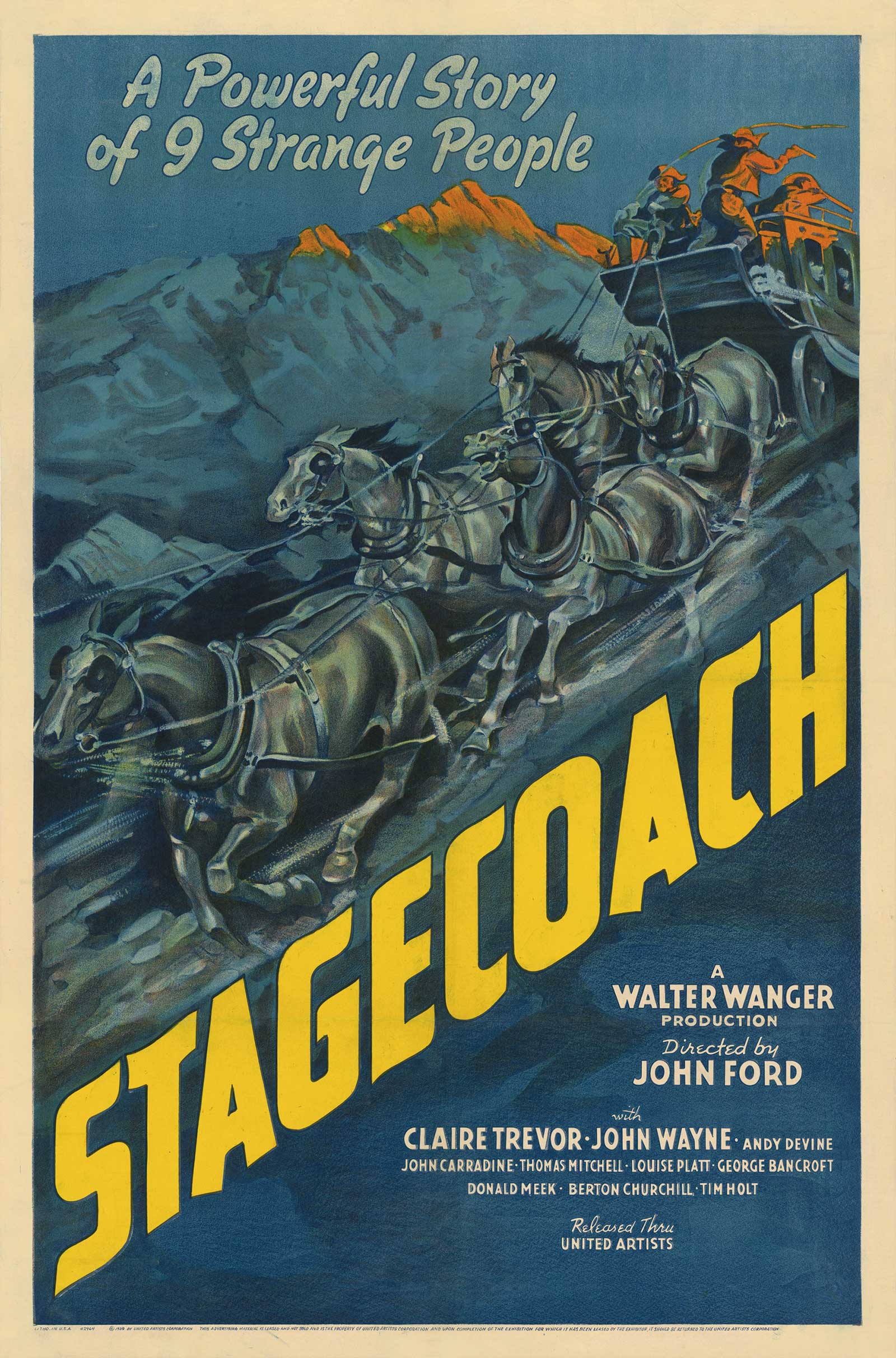
Stagecoach movie poster, 1939, lithograph. Poster collection, Margaret Herrick Library, Academy of Motion Picture Arts and Sciences.
But what medium was more influential? A new exhibition opening in May at the Sid Richardson Museum in Fort Worth, Texas, will offer some possible answers to that question and many others. One answer is in the title of the exhibition itself—The Cinematic West: The Art That Made the Movies.
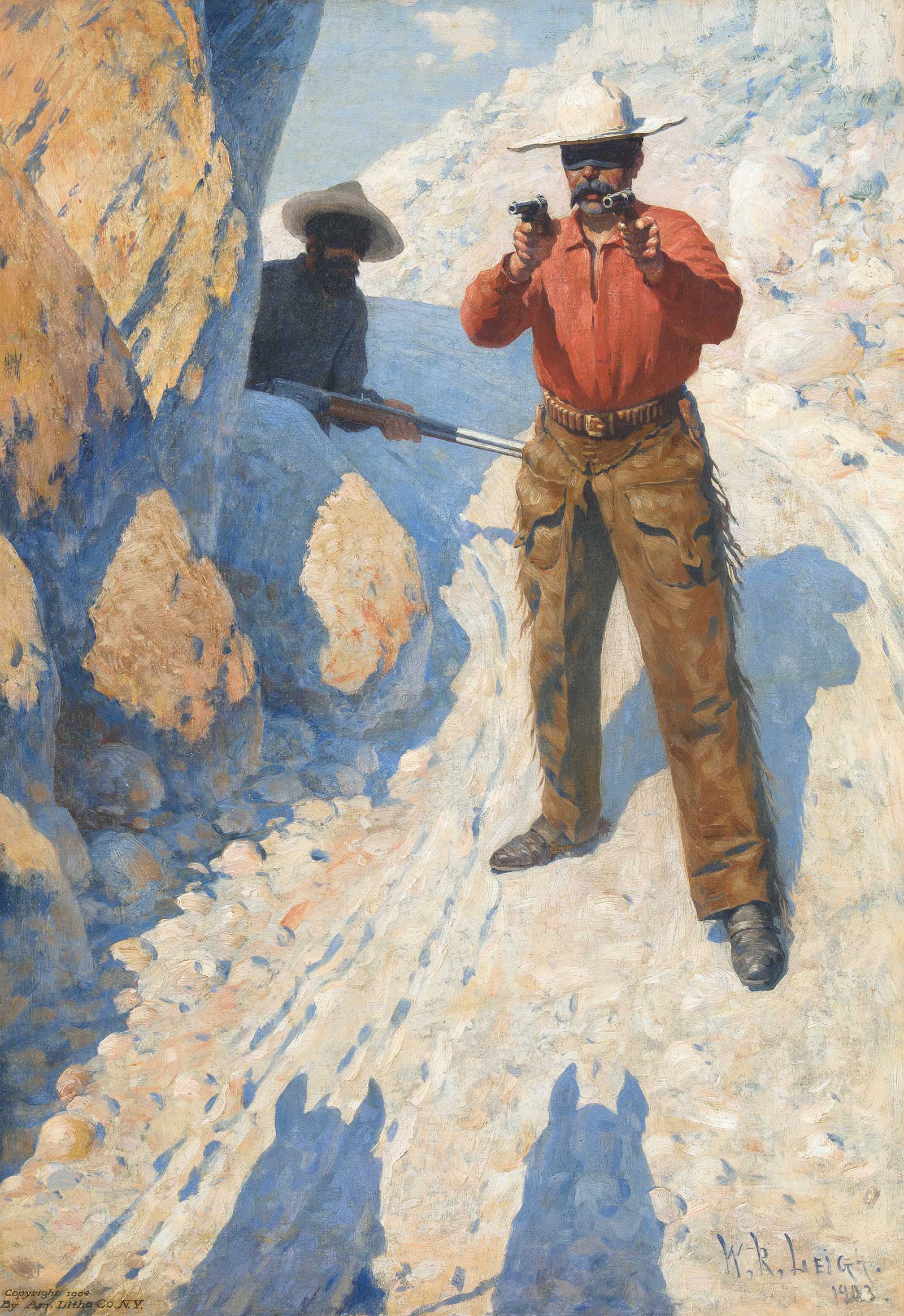
William R. Leigh (1866-1955), The Hold Up, 1903, oil on canvas. Sid Richardson Museum.
“The exhibition’s genesis is really around the fact that we had access to one painting: Frederic Remington’s painting A Misdeal from around 1897. The painting was used in an early John Ford film from 1918. It’s a silent film titled Hell Bent and it stars Harry Carey. [Ford] actually used the painting as a jumping-off point for the action in the Western,” says Scott Winterrowd, director at the Sid Richardson Museum. “As I began to dig into this painting, I found out that the painting was owned by Douglas Fairbanks at some early part of the 20th century. We think he probably had it in his possession by the late 1910s. We know he had it by 1932 because there’s a photograph of it with Mary Pickford and Douglas Fairbanks Jr. And we know he had it until his death because it wasn’t sold until 1953, after his death, by his third wife Lady Ashley who sold it to the movie producer Hal Wallis. So, it stayed in Hollywood for most of the 20th century, as well as a major influence over Douglas Fairbanks, John Ford and Hal Wallis when they were making Westerns.”
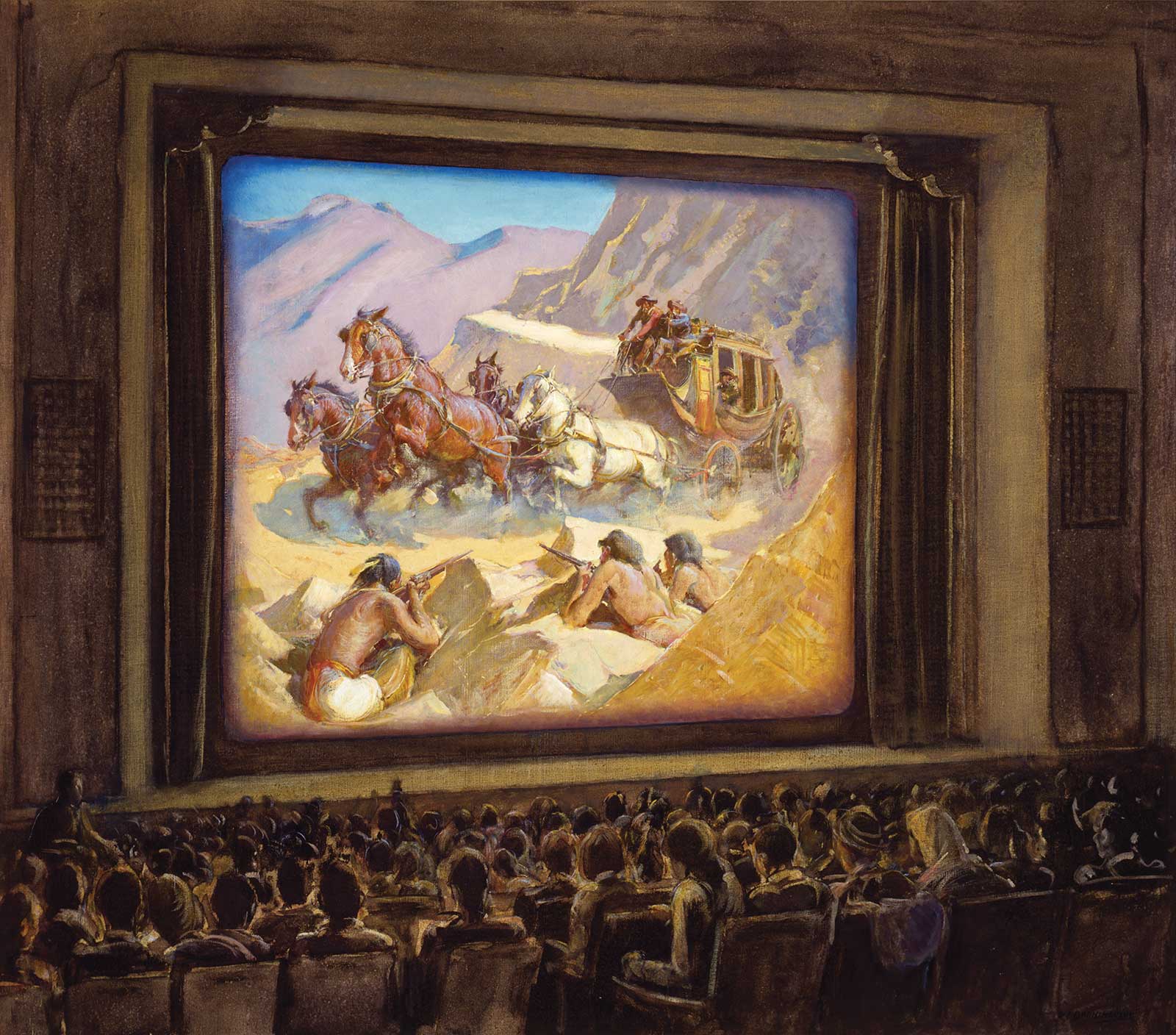
Oscar E. Berninghaus (1874-1952), Movie Night at Taos Theater, 1939, oil on canvas. Private Collection.
Fairbanks is a recurring character in the exhibition. He pops up again in a 1920s photo with Charlie and Nancy Russell. The photo was taken on the set of Fred Niblo’s The Three Musketeers, released in 1921. Fairbanks is dressed in costume as the film’s hero, D’Artagnan.
“What’s interesting about this encounter is that Russell wrote a letter to Fairbanks. It’s a letter where he talks about how nice it is that Fairbanks is doing these new adventure movies like The Three Musketeers, but [Russell] says to him in the letter, ‘Don’t forget the Westerns.’ And so he’s kind of reminding him about the Western movies he had made previous to that,” Winterrowd says. “Not only do we have the photo, but we’re also borrowing that letter from the C.M. Russell Museum. After that encounter, Nancy Russell and Mary Pickford corresponded with each other. Douglas Fairbanks and Mary Pickford had bought a Russell the previous year from a gallery in Los Angeles. And there’s a whole story behind that where they thought they were buying it as a secret gift for each other, and it was a big mix-up.
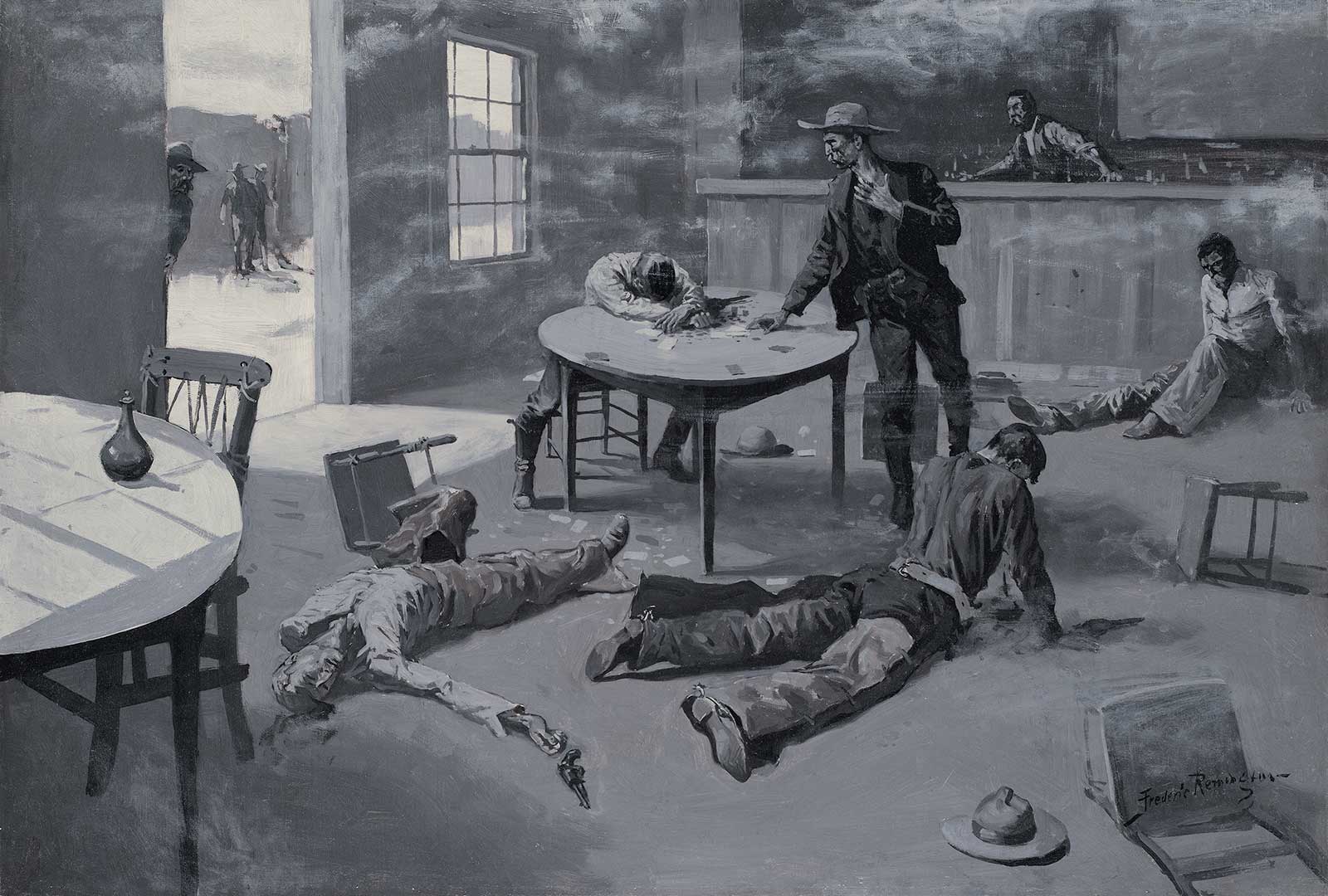
Frederic Remington (1861-1909), A Misdeal, ca. 1897, oil on canvas. Private Collection.
There’s a reference to that story in a newspaper article and in the correspondence between Nancy and Mary. But Nancy prompted this whole idea that Russell would create a portrait of Fairbanks. And so evidently, Mary Pickford sent photos of Fairbanks as D’Artagnan. What came of that was a bronze sculpture that Russell made. And we’re going to have that on view in the exhibition as well.”
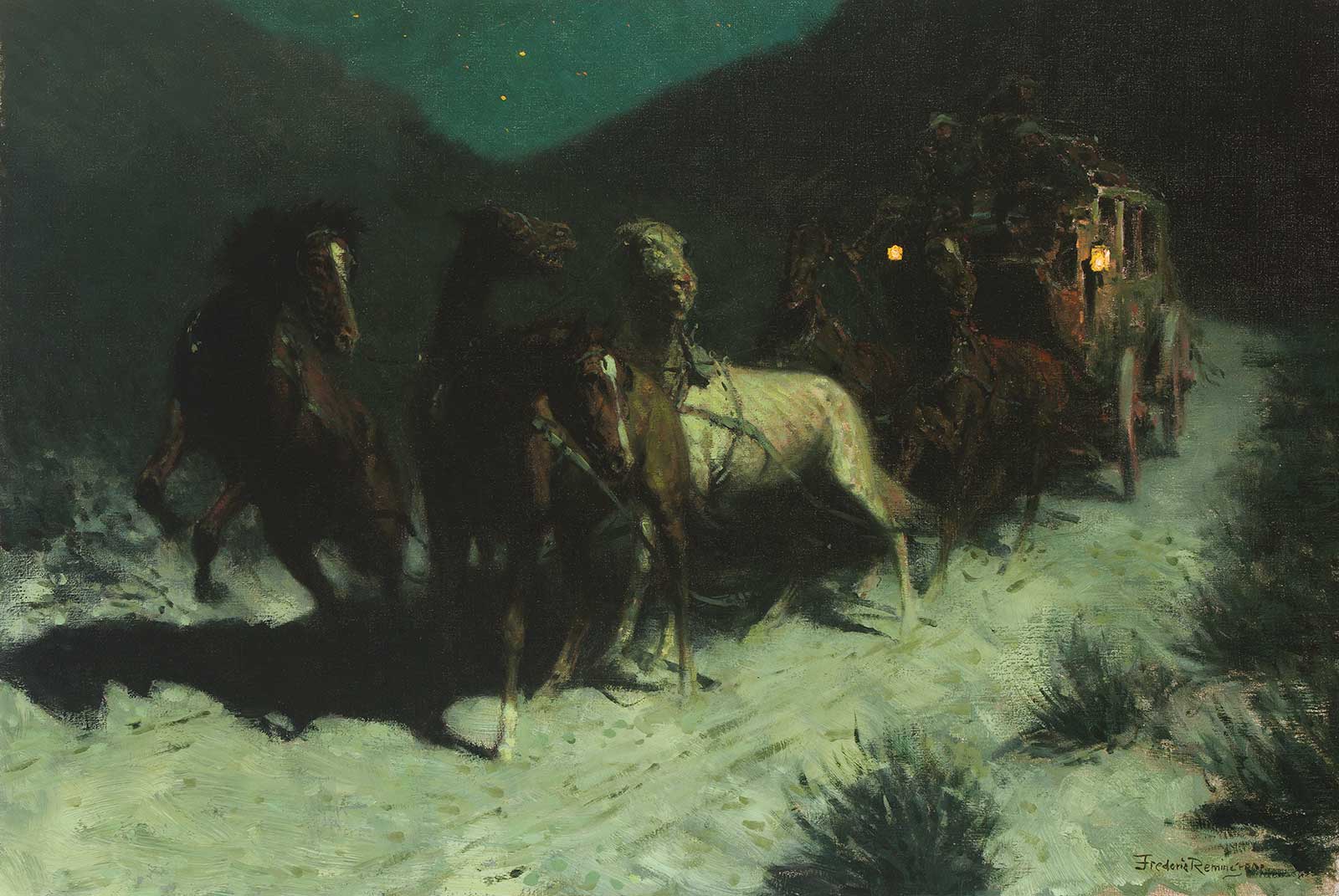
Frederic Remington (1861-1909), A Taint on the Wind, 1906, oil on canvas. Sid Richardson Museum.
Another important piece in the exhibition is Oscar E. Berninghaus’ 1939 painting Movie Night at Taos Theater. Berninghaus painted the scene because his son-in-law was part owner of a movie theater in Taos. The painting shows moviegoers watching a Western featuring Indigenous fighters ready to ambush a stagecoach. Although these film portrayals of Native Americans are often considered dated and problematic today, at the time the audience would have been enthusiastically split: “There are stories about how the Indigenous people of Taos would cheer the Indians in the film, and then the white people would cheer for the cowboys,” Winterrowd says. “Lots of fun and crazy stories about that painting.”
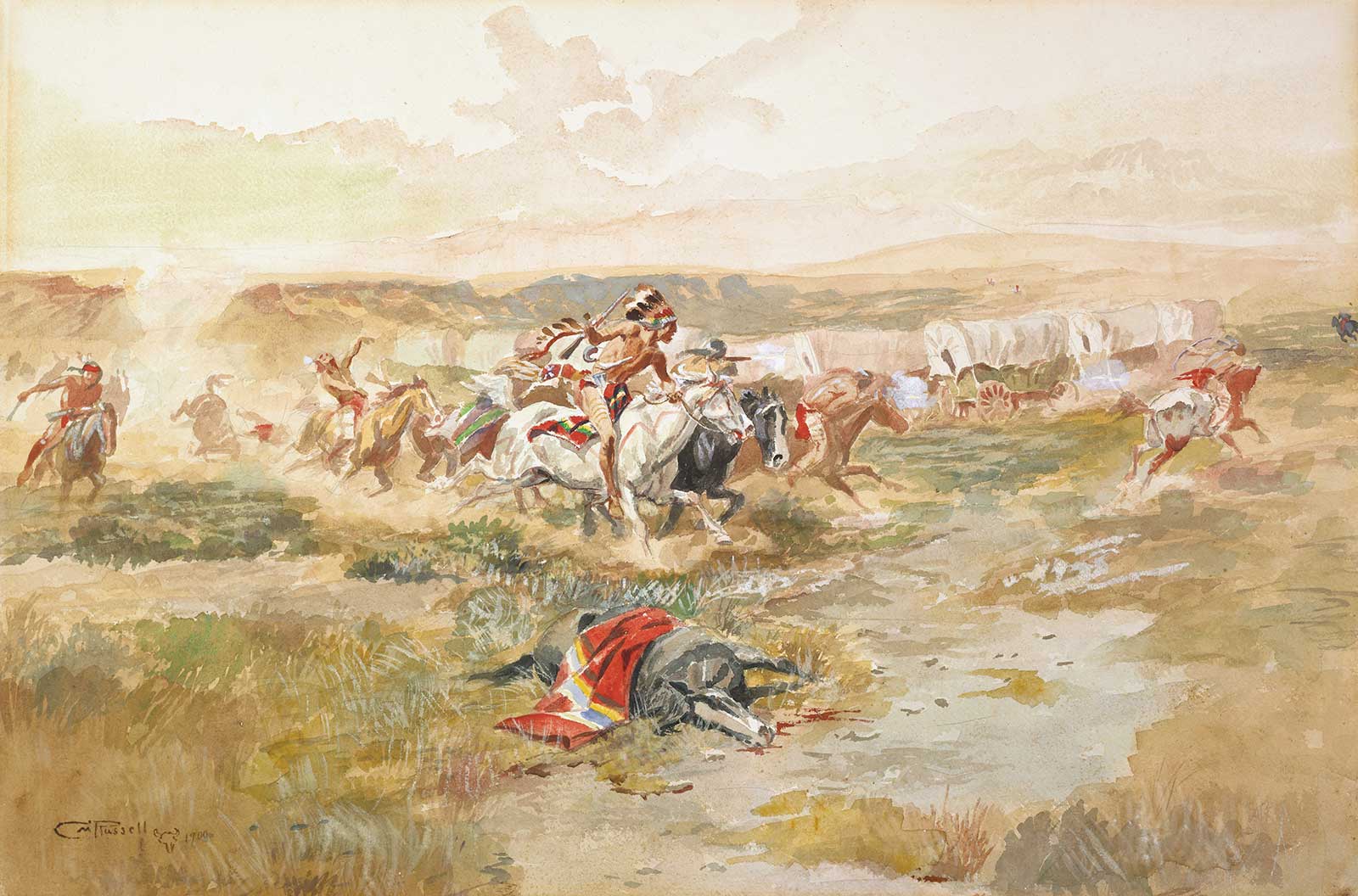
Charles M. Russell (1864-1926), Breaking Up the Ring, 1900, pencil, watercolor and gouache on paper. Sid Richardson Museum.
Supporting the Berninghaus work is an original poster for the 1939 Ford film Stagecoach, which was one of John Wayne’s earliest hits, and also Remington’s 1906 nocturne A Taint on the Wind, which also has a stagecoach theme.
William R. Leigh’s painting The Hold Up will be on view as well. The work was completed in 1903, the same year that The Great Train Robberywas released. The film ended with a short segment where one of the film’s outlaws points his revolver at the audience and fires several times. Leigh’s painting has a similar character, who nearly points his guns right at the viewer. There is no sign that the film influenced the painting—or the painting influenced the film—and yet the similarities are fascinating to think about.
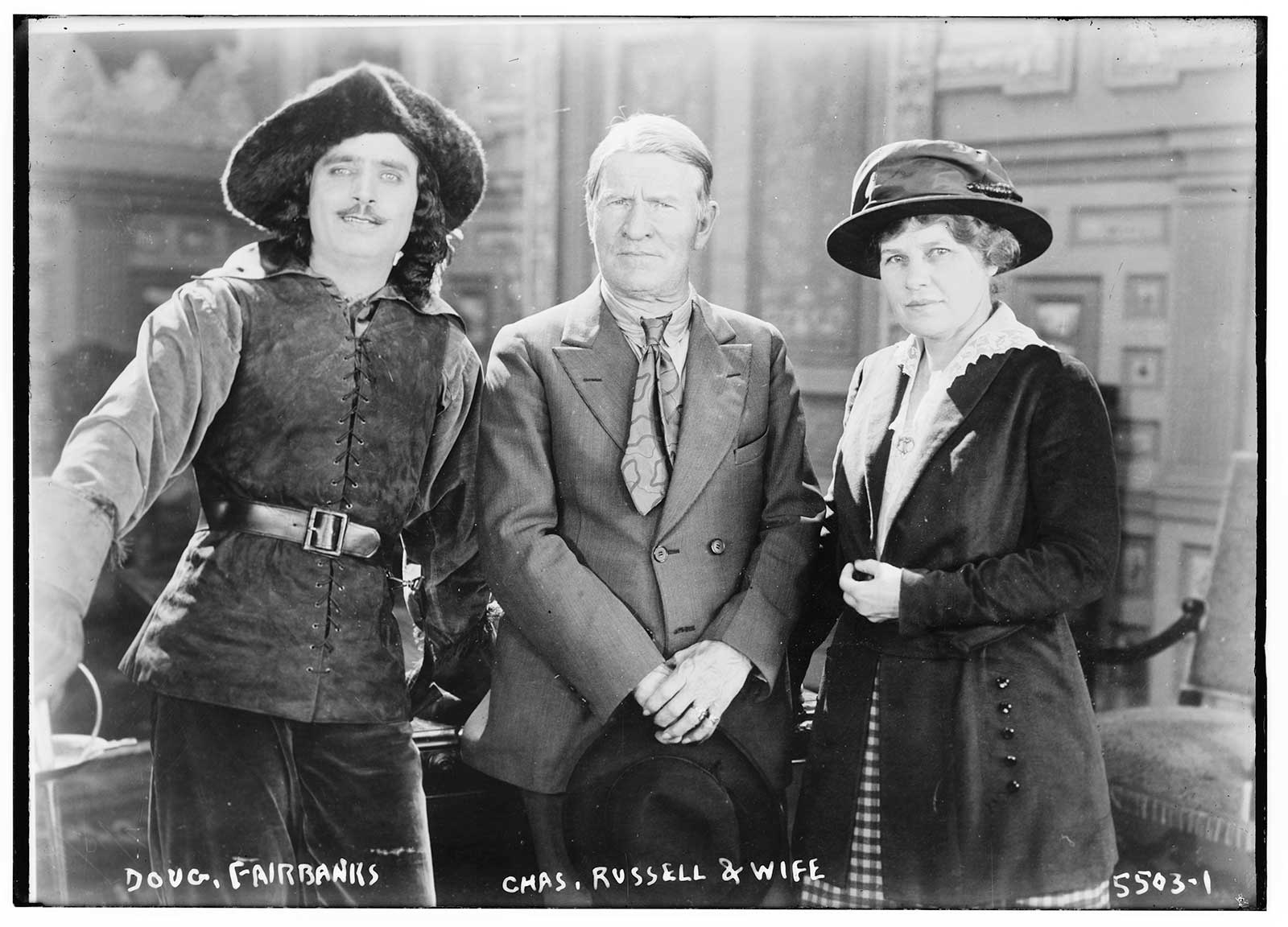
Douglas Fairbanks, Charles M. Russell and Nancy Russell, Bain News Service, ca. 1920-1925. Library of Congress, Prints & Photographs Division, George Grantham Bain Collection.
The exhibition, which will feature more than 50 objects, will open in May and continue through April 2026. —
The Cinematic West: The Art That Made the Movies
May 2025-April 2026
Sid Richardson Museum
309 Main Street, Fort Worth, TX 76102
(817) 332-6554, www.sidrichardsonmuseum.org
Powered by Froala Editor


